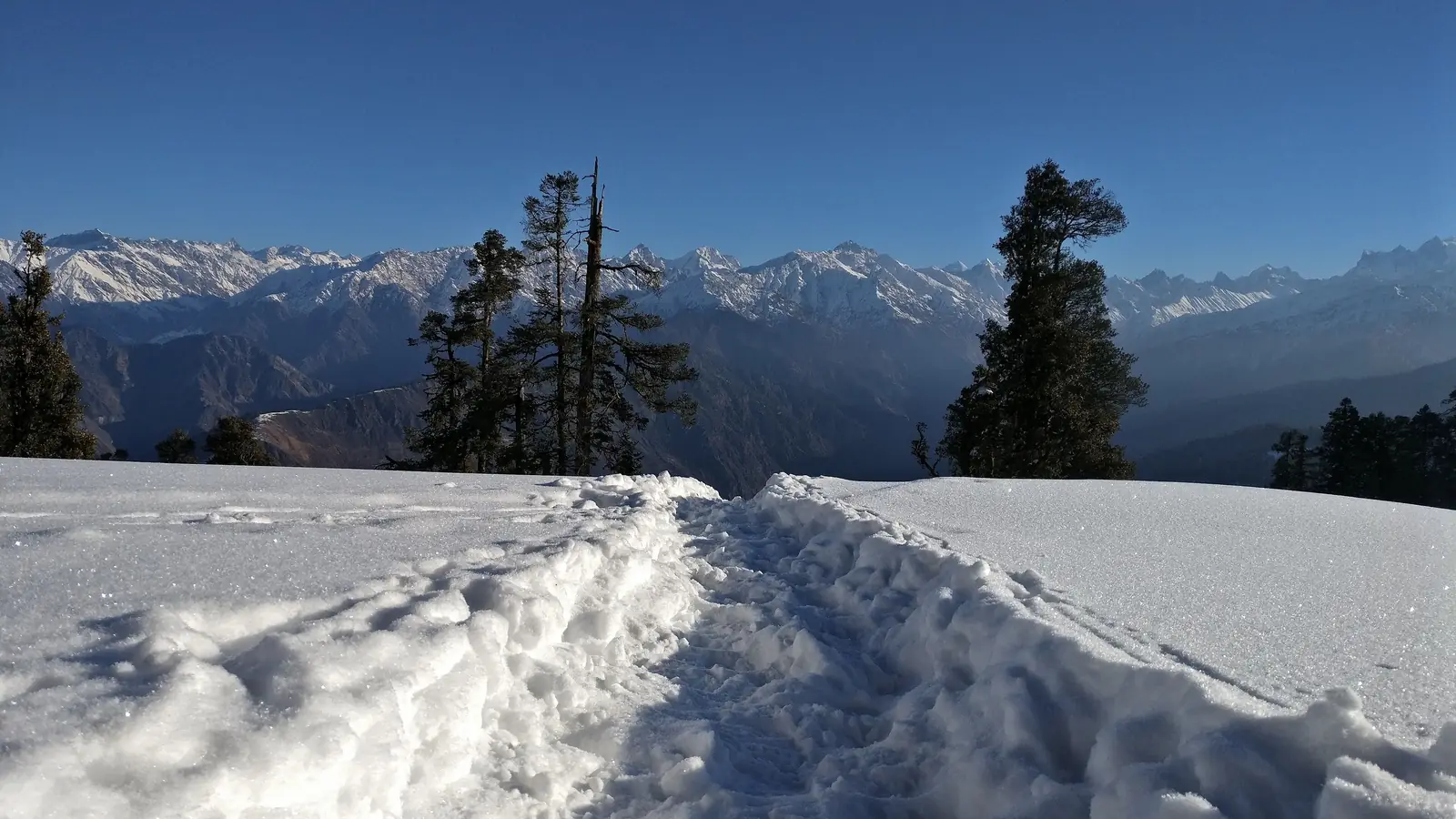
Kedarkantha
India's most-walked winter summit. A 3,810 m peak inside Govind wildlife sanctuary, reachable by beginners in six days.
- Days
- 6
- Distance
- 20 km
- Max altitude
- 3,810 m
- Total ascent
- 1,840 m
- Grade
- Easy
- Season
- Dec–Apr
Elevation profile
Kedarkantha is the trek most Indian trekkers do first, and the reason is honest: it delivers a genuine Himalayan summit at 3,810 m, 12,500 ft, without needing prior experience, technical skill or more than a week off work.
The route starts at Sankri (1,950 m) in the Govind wildlife sanctuary and climbs through pine and oak to camps at Juda ka Talab and Kedarkantha base. The summit push starts in the dark to reach the top for sunrise, when Swargarohini, Bandarpoonch and Black Peak come up across the horizon.
The trade-off for accessibility is company. Kedarkantha is heavily trafficked between late December and February, and the popular campsites can hold hundreds of people on a peak weekend. March and early April are quieter, still hold snow near the summit, and are considerably more pleasant.
The other thing worth knowing: this is a beginner trek, not an easy one. You are still gaining 1,840 m and sleeping above 3,000 m in sub-zero conditions. Cold injuries and altitude symptoms happen here every season, usually to people who treated it as a weekend outing.
Common questions
Is Kedarkantha suitable for beginners?
Yes: it is the most popular first Himalayan trek in India. Six days, around 20 km, no technical sections. But you still gain 1,840 m and sleep above 3,000 m in sub-zero conditions, so basic fitness and proper cold-weather kit are not optional.
What is the best time for the Kedarkantha trek?
December to April. Late December to February gives deep snow and the classic winter summit, but is extremely busy. March and early April still hold summit snow with a fraction of the crowds.
How high is Kedarkantha summit?
3,810 m, or about 12,500 ft. The trek starts from Sankri at 1,950 m, giving roughly 1,840 m of cumulative ascent across the route.