These two dominate "best beginner trek in India" lists, and the lists rarely mention that they are different treks in almost every respect that matters.
The short version
| Kedarkantha | Hampta Pass | |
|---|---|---|
| Season | December–April | June–September |
| Days | 6 | 5 |
| Distance | ~20 km | ~26 km |
| Max altitude | 3,810 m | 4,287 m |
| Total ascent | ~1,840 m | ~1,600 m |
| Shape | Summit, out and back | Pass crossing, point to point |
| Grade | Easy | Moderate |
| Crowds | Very high in peak winter | Moderate |
If you only take one thing: Kedarkantha is easier and far busier. Hampta Pass is harder and more interesting.
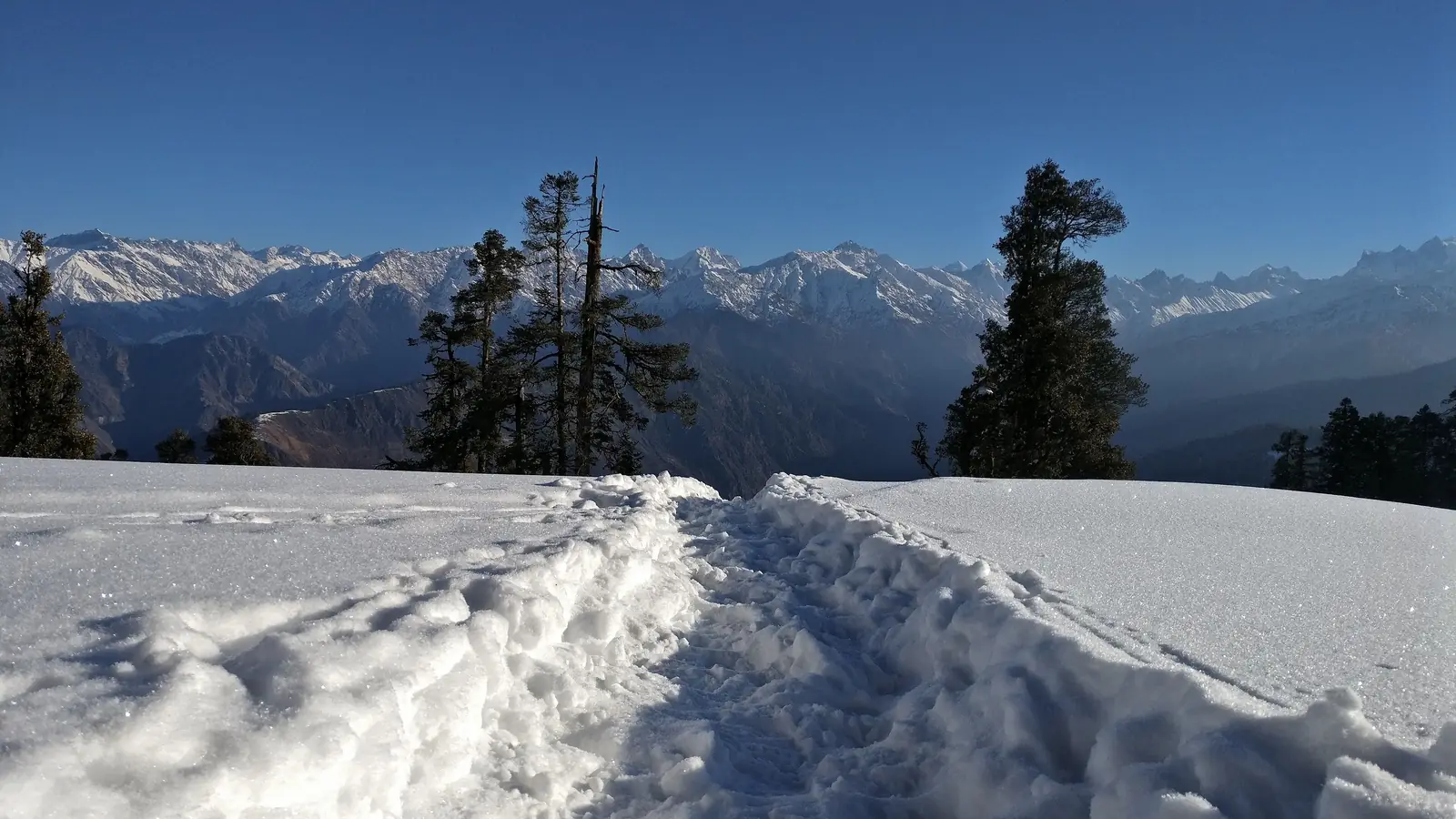
They run in opposite seasons
This decides it for most people before anything else.
Kedarkantha is a winter trek, December to April, snow underfoot, sub-zero nights. Hampta Pass is a monsoon-season trek, June to September, and it works precisely because the far side of the pass sits in the Pir Panjal rain shadow while the rest of Himachal is soaked.
So the real question is often just: when can you take leave?
What each one actually gives you
Kedarkantha gives you a summit. You climb in the dark and stand on a 3,810 m peak at sunrise with Swargarohini, Bandarpoonch and Black Peak across the horizon. It is a clean, satisfying objective, and the sense of having summited something is a large part of why it is so popular.
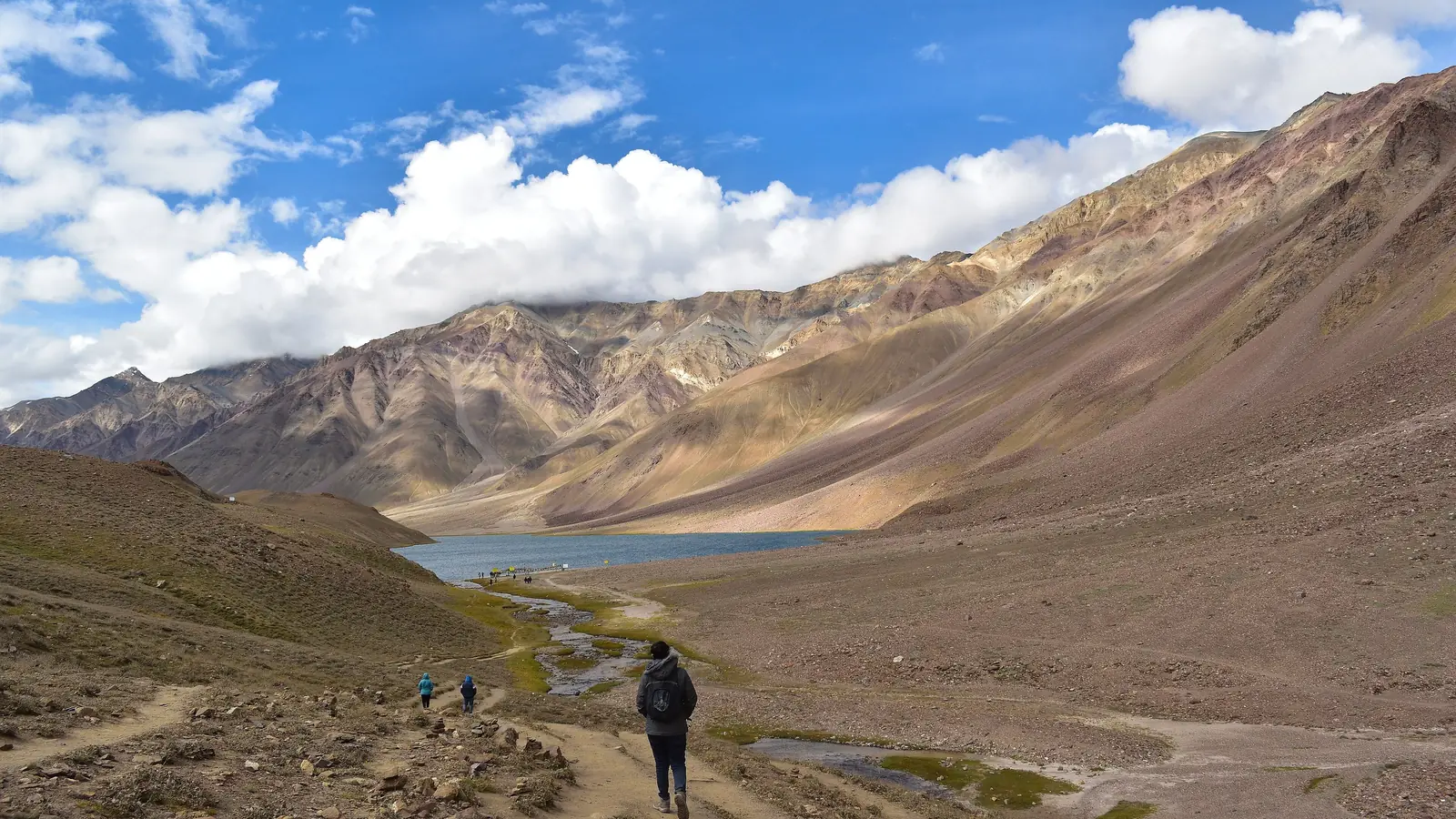
Hampta Pass gives you a transition. You start in green Kullu, pine, meadows, glacial streams, cross at 4,287 m, and drop into Lahaul, which is arid and brown and looks like a different country. Walking across a rain shadow in a single day is a genuinely striking thing to experience, and no out-and-back trek can offer it.
Which one is more difficult?
Kedarkantha is graded easy and deserves it: no technical sections, moderate daily distances, well-trodden trail. But it is not nothing. You gain 1,840 m and sleep above 3,000 m in freezing conditions. Cold injuries and altitude symptoms happen on this trek every single season, almost always to people who treated it as a weekend outing and brought the wrong kit.
Hampta Pass is graded moderate and also deserves it. The pass day is the crux: a steep climb followed by a sharp, loose descent into the Lahaul valley, with 4,287 m to deal with. It is fine for a fit first-timer. It is not fine for someone who has not walked more than 5 km in a year.
The crowd problem
This is the thing most comparisons skip.
Kedarkantha between late December and February is extremely busy. Popular campsites can hold hundreds of people on a peak weekend. If your mental image of a Himalayan trek involves solitude, that image will not survive contact with Kedarkantha at New Year.
Two fixes: go in March or early April, when there is still summit snow and a fraction of the traffic. Or pick Hampta, which is busy but not on that scale.
What about Chandratal?
Many Hampta itineraries bolt on a road trip to Chandratal, the crescent lake at around 4,300 m. It is worth doing, but confirm before you pay. It needs Kunzum La to be open, carries separate Rohtang and Chandratal permits, and is a weather-dependent add-on rather than part of the walk. Operators sometimes sell it as included and then drop it.
So which one
Pick Kedarkantha if: you can only travel in winter, you want a summit, you have never trekked before, or you want the lowest-risk introduction available.
Pick Hampta Pass if: you can travel June to September, you want to cross something rather than climb and return, you have some walking fitness, or you want fewer people.
Pick neither if you want quiet at any cost, in which case look at the Kashmir Great Lakes in July to September, which gives better scenery than both for a similar difficulty to Hampta.