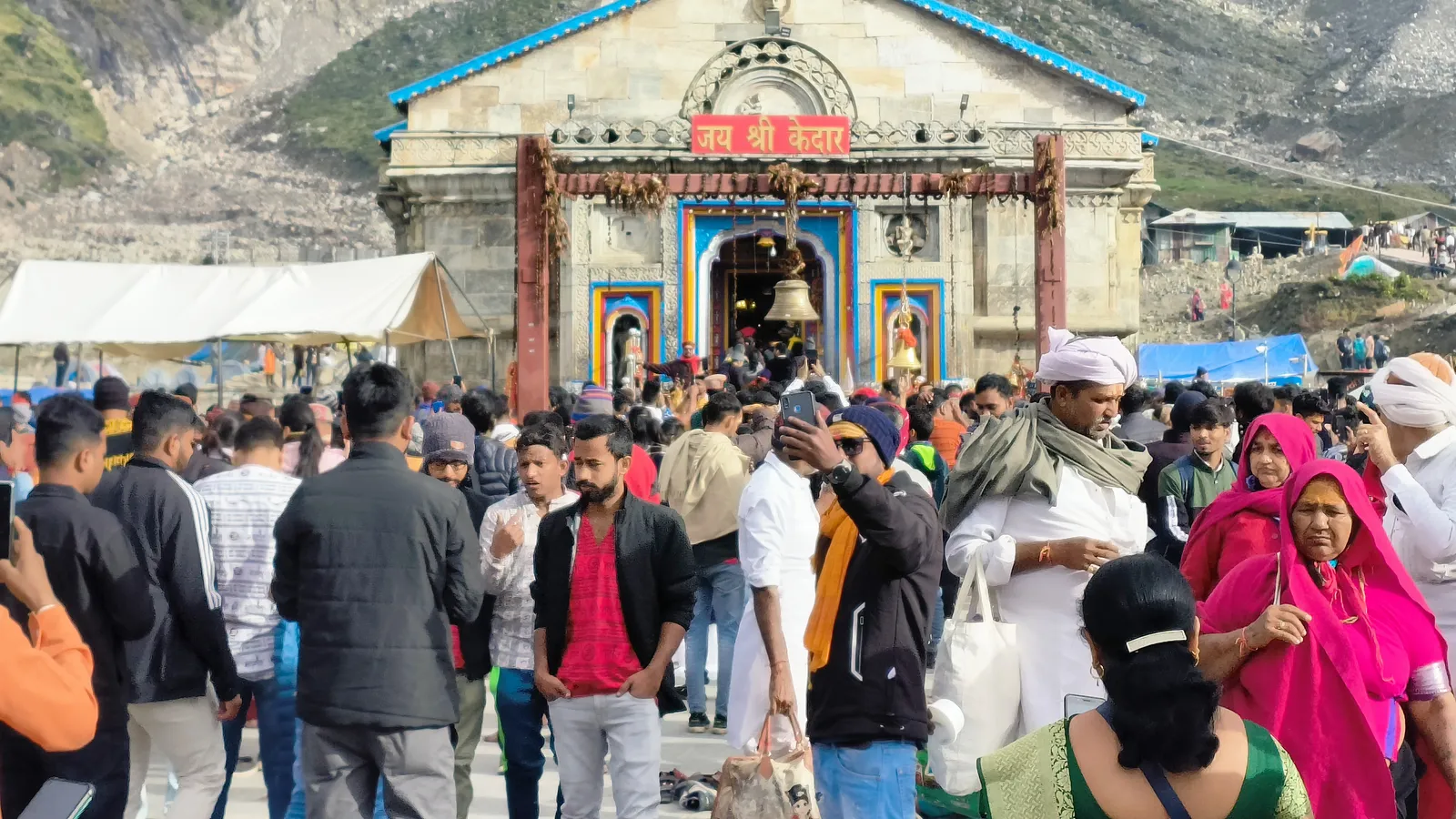
Kedarnath
केदारनाथ
A 16 km climb to a jyotirlinga at 3,583 m. Registration is mandatory and checked at Sonprayag, and altitude, not devotion, is what defeats most people.
- Deity
- Shiva, as the Kedarnath jyotirlinga
- Tradition
- Shaiva
- Managed by
- Badrinath Kedarnath Temple Committee, with yatra registration by Uttarakhand Tourism
- Dress code
- Modest dress, and serious warm layers; it is 3,583 m and cold even in June
- Best months
- May–Jun, Sep–Oct
Kedarnath is the hardest of the Char Dham to reach and the one where the mountain matters most. The temple sits at 3,583 m below the Kedarnath peak, and the last 16 km from Gaurikund has no road. You walk it, ride a pony, take a palanquin, or fly.
The single thing that turns people back is paperwork. Yatra registration is mandatory, free, and checked at the Sonprayag barrier. Helicopter tickets do not substitute for it: without registration you are stopped before you reach the helipad queue, ticket or not.
The second thing is altitude. Gaurikund sits near 1,980 m and the temple at 3,583 m, so you gain around 1,600 m in a single day if you walk it, or arrive at 3,583 m within minutes if you fly. Helicopter pilgrims are the ones who most often feel it, because they skip the gradual gain entirely.
The 2013 floods rebuilt the town around the temple, and the approach you walk today is not the one in older accounts. Route detail from before 2013 should be treated as historic rather than practical.
What to do when you arrive
Almost everything that goes wrong here is a sequencing problem, the right things done in the wrong order. This is the order that works.
Register for the yatra: without it you are turned back
Registration is free and mandatory for Kedarnath, through the Uttarakhand Tourism portal at registrationandtouristcare.uk.gov.in, the Tourist Care Uttarakhand app, or offline counters. You receive a QR e-pass. It is checked at Sonprayag, and no pass means no onward travel.
Weeks aheadDecide how you are covering the 16 km, then book it
On foot, by pony or palanquin from Gaurikund, or by helicopter from Phata, Sersi or Guptkashi. Helicopter seats are booked through IRCTC's heliyatra service and sell out early. Book the seat only after you have the registration.
Weeks aheadPlan to stop at Sonprayag, not Gaurikund
Private vehicles are not allowed past Sonprayag. You park there, clear the registration check, and take a shared jeep for the last few kilometres to Gaurikund where the walk starts. Build this transfer into your timings.
On arrivalStart the walk early and treat it as a mountain day
Most walkers take six to nine hours up. Weather closes in during the afternoon, and the route is exposed. Carry a windproof layer, water and a torch regardless of how warm Gaurikund feels.
On the daySleep at the top only if you have booked it
Accommodation at Kedarnath is limited to GMVN huts, tents and a handful of lodges, and it fills completely in season. Arriving without a booking in the expectation of finding a room is how people end up walking down in the dark.
Before darshan
A note on what this page is not. Ritual detail varies by family tradition and by sampradaya. This page covers the practical and administrative side, and leaves religious instruction to the temple and to your own community.
Darshan options compared
| Type | Cost | How to book | Who it suits |
|---|---|---|---|
| Yatra registration | Free | registrationandtouristcare.uk.gov.in or the Tourist Care app | Everyone: nothing else works without it |
| Walk from Gaurikund | Free | No booking needed | Anyone reasonably fit with a day to spare |
| Pony or palanquin | Paid, rates published at Gaurikund | Licensed operators at Gaurikund | Those who cannot walk the full 16 km |
| Helicopter from Phata, Sersi or Guptkashi | Paid, limited seats | IRCTC heliyatra, well ahead | Limited time, but the worst option for acclimatisation |
Waiting times shift enormously with festival dates and weekends. Any site quoting a fixed hour count is guessing, ask a local guide the week you travel.
What to do, and what not to
Do
- Register first and carry the QR e-pass; it is checked at Sonprayag
- Carry warm and windproof layers even in June
- Allow a night at Guptkashi or Sonprayag to gain height gradually
- Book accommodation at the top before you start walking
Don’t
- Assume a helicopter ticket replaces registration: it does not
- Attempt the walk up and back in one day without checking the weather
- Ignore headache or nausea at 3,583 m; descending is the only reliable fix
- Plan a monsoon visit in July or August without accepting landslide risk
Common questions
Is registration mandatory for Kedarnath?
Yes. Registration is free but compulsory, through the Uttarakhand Tourism portal, the Tourist Care Uttarakhand app or offline counters, and produces a QR e-pass. It is checked at the Sonprayag barrier, and pilgrims without it are turned back even if they hold helicopter tickets.
How long is the Kedarnath trek?
Roughly 16 km each way from Gaurikund, gaining around 1,600 m to reach the temple at 3,583 m. Most people take six to nine hours going up.
When does the Kedarnath temple open and close?
It opens around Akshaya Tritiya in late April or May and closes on Bhai Dooj in late October or November. The exact dates are announced each year, so confirm before booking travel.
Is altitude sickness a risk at Kedarnath?
Yes. The temple sits at 3,583 m, well above the 2,500 m threshold where symptoms begin. Helicopter passengers are most exposed because they arrive at altitude within minutes rather than gaining it over a day.