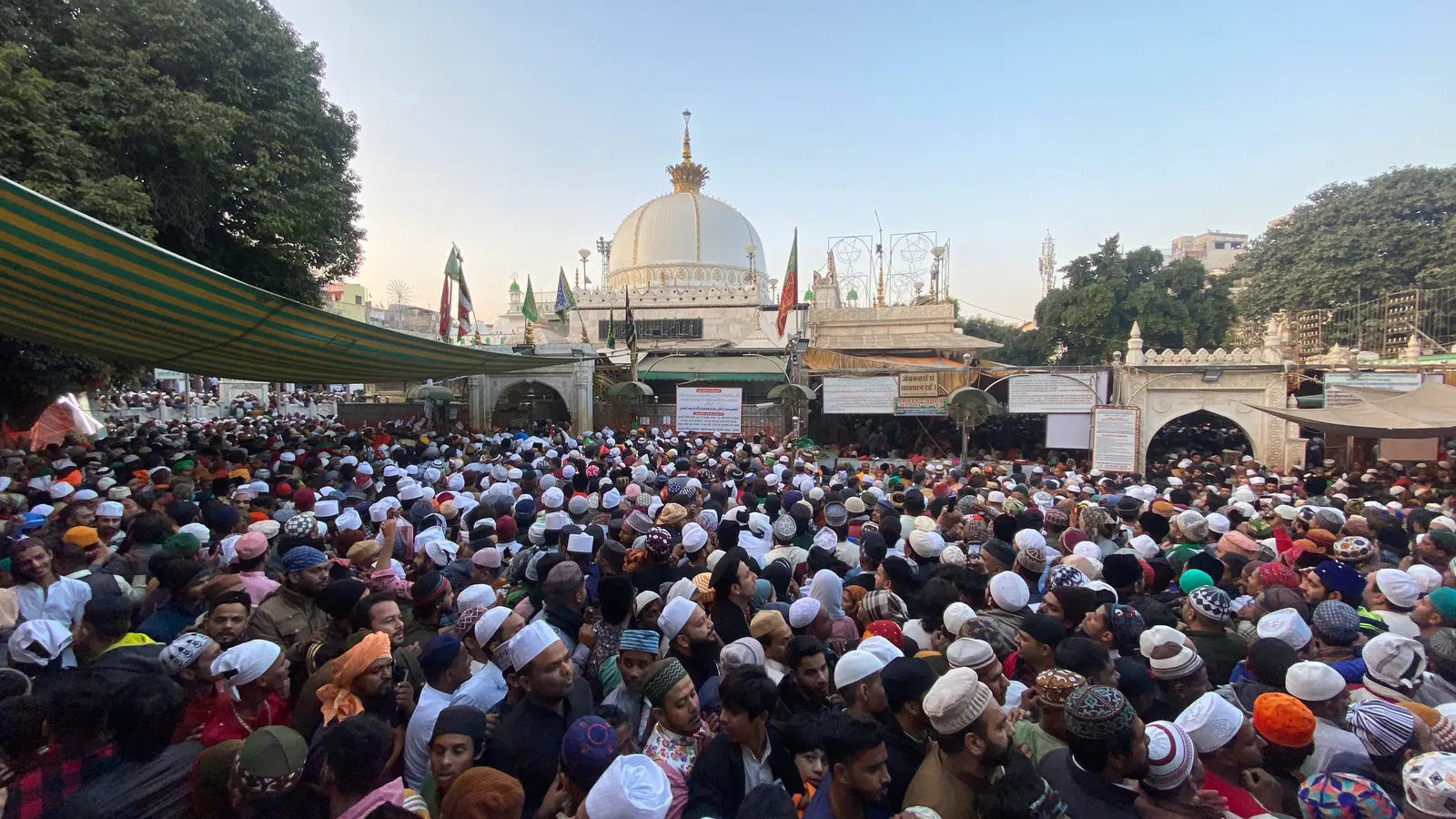
Ajmer Sharif Dargah
The shrine of a Sufi saint visited by Muslims, Hindus and others alike. Free to enter, and the practical difficulty is the crowded lanes and the pressure to pay for things that are not required.
- Dargah of
- Khwaja Moinuddin Chishti
- Tradition
- Chishti Sufi
- Managed by
- Dargah Khwaja Saheb Ajmer, under the Dargah Committee
- Dress code
- Modest dress, head covered by everyone, shoes removed
- Best months
- Oct–Feb
Ajmer Sharif is the tomb of Khwaja Moinuddin Chishti, the Sufi saint who established the Chishti order in India. It draws pilgrims from several faiths, and that mixed following is not incidental to the place but central to what it has always been.
Entry is free. There is no ticketed darshan, no priority queue and no booking. What visitors encounter instead is a dense commercial approach: the lanes leading to the shrine are lined with stalls selling flowers, chadars and offerings, and the pressure to buy is considerable.
The khadims are the hereditary caretaker families attached to the shrine, and engaging one to guide you through ziyarat is a long-standing practice. It is also where most visitor complaints arise, because donation amounts are sometimes pressed hard on newcomers. Any figure quoted to you is a request, not a fee.
Timings run roughly from four or five in the morning until nine or ten at night depending on the season, with the shrine closing briefly for prayers and rituals through the day.
What to do when you arrive
Almost everything that goes wrong here is a sequencing problem, the right things done in the wrong order. This is the order that works.
Cover your head and plan to remove your shoes
Head covering applies to everyone, regardless of faith or gender. Shoes come off at the entrance and can be left at the deposit stands. Dress modestly with shoulders and legs covered.
Before enteringDecide about a chadar before you reach the stalls
Offering a chadar or flowers at the tomb is customary but entirely optional. Prices vary widely by size and the sellers are persistent. Decide what, if anything, you want to offer before you walk into the lane, not while standing in it.
Before enteringUnderstand what a khadim is before you engage one
Khadims are the hereditary caretaker families and can genuinely help you through ziyarat and the crowds. Agree what you are comfortable donating in advance. Anything presented as a compulsory fee or a fixed rate is not official.
Before ziyaratGo early morning or late evening
The shrine is busiest in the middle of the day, and the approach lanes are narrow. Early morning is calmer, and the evening qawwali is what many people specifically come for.
On the dayAvoid the Urs unless you are going for it
The Urs draws crowds on a scale that changes the visit entirely. It moves each year with the Islamic calendar, so check the dates rather than assuming a month, and book accommodation far ahead if you are going.
When planning
A note on what this page is not. Ritual detail varies by family tradition and by sampradaya. This page covers the practical and administrative side, and leaves religious instruction to the temple and to your own community.
Darshan options compared
| Type | Cost | How to book | Who it suits |
|---|---|---|---|
| General ziyarat | Free | None: simply arrive | Everyone |
| Chadar or flower offering | Paid, varies widely by size | Stalls on the approach lanes | Optional, never required |
| Khadim guidance | Donation, agreed in advance | At the shrine | First-time visitors wanting the sequence explained |
| Evening qawwali | Free | None | Anyone who came for the music as much as the shrine |
Waiting times shift enormously with festival dates and weekends. Any site quoting a fixed hour count is guessing, ask a local guide the week you travel.
What to do, and what not to
Do
- Cover your head, whatever your faith or gender
- Agree any donation before accepting help, not afterwards
- Visit early morning for calm, or evening for qawwali
- Keep valuables secure; the approach lanes are tightly packed
Don’t
- Treat a quoted donation as an official fee: entry is free
- Buy a chadar under pressure in the lane
- Photograph people at prayer without asking
- Arrive during the Urs without accommodation booked well ahead
Common questions
Is there an entry fee at Ajmer Sharif?
No. Entry and ziyarat are free. Chadars, flowers and any donation to a khadim are optional, and anything presented as a compulsory charge is not official.
Can non-Muslims visit Ajmer Sharif?
Yes. The dargah has always drawn visitors from several faiths and Hindus form a large share of pilgrims. The requirements are the same for everyone: modest dress, head covered and shoes removed.
What are the Ajmer Sharif timings?
Roughly 04:00 or 05:00 until 21:00 or 22:00, varying with the season, with short closures through the day for prayers and rituals. Confirm locally, particularly around festivals.
Do I need to hire a khadim at Ajmer Sharif?
No. A khadim can be genuinely useful for a first visit, explaining the sequence and getting you through the crowds, but engaging one is a choice. Agree the donation before you accept the help.