Zanskar & the Chadar
Frozen-river walking in January, monastery circuits in July, the same valley, two completely different trips.
- Altitude
- 4,270 m
- Terrain
- High-altitude river gorge and cold desert
- Best months
- Jan–Feb, Jun–Sep
- Region
- Ladakh, India
For a few weeks each winter the Zanskar river freezes hard enough to walk on, and the gorge becomes the only route between Zanskar and the Indus valley. Locals have used it for generations to move goods and reach school. The ice is never uniform: it shifts overnight, and a stretch that carried you yesterday may be open water today. This is why the walk is led, not attempted alone.
The Ladakh administration now requires a medical certificate, registration and a minimum acclimatisation period in Leh before anyone starts. That is a response to deaths on the route, and any operator willing to skip it is telling you something about how they run everything else.
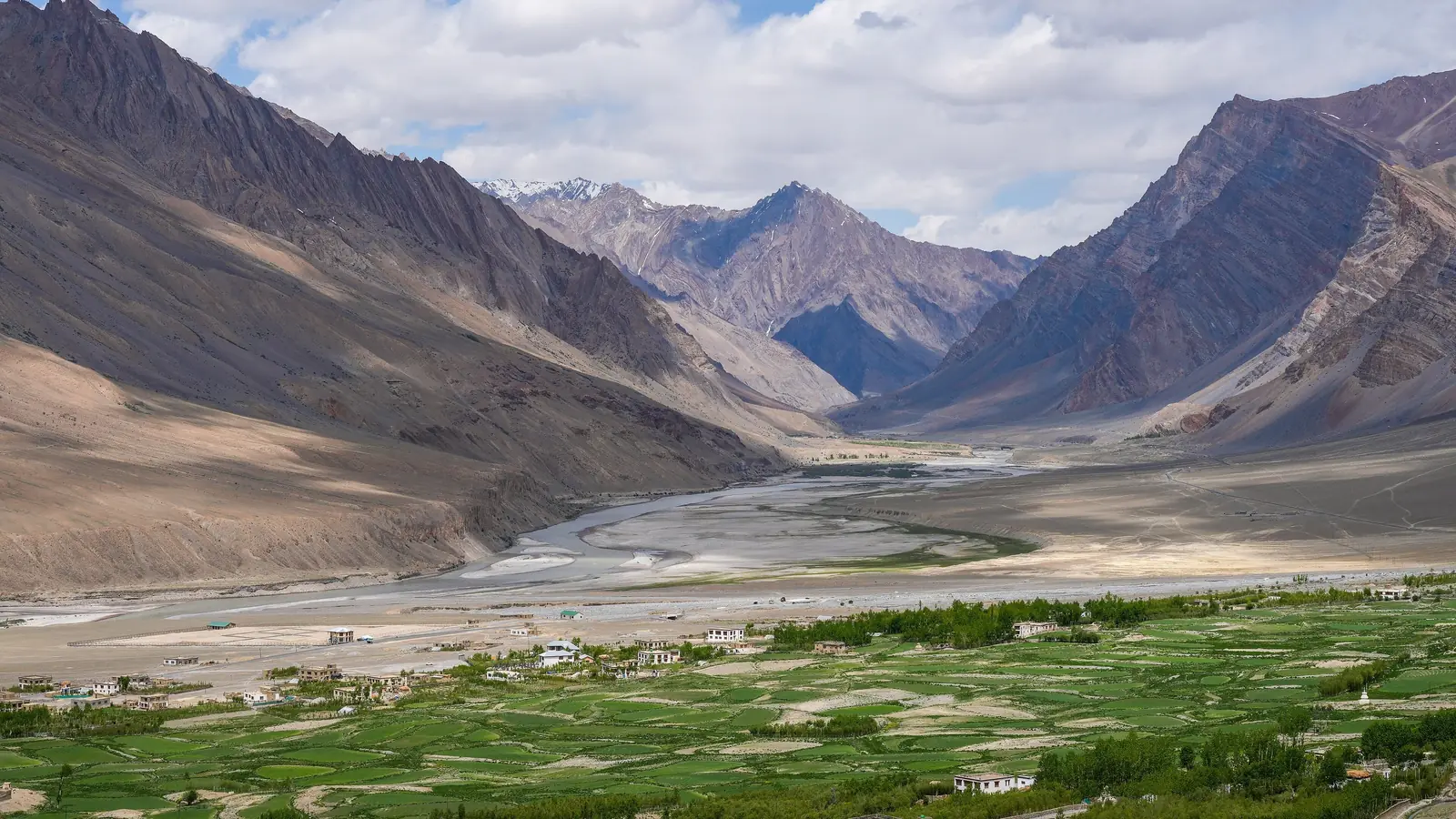
In summer the same valley is unrecognisable. Padum becomes reachable by road over the Pensi La, and the draw shifts to Phugtal, a monastery built into a cliff cave, reachable only on foot, and Karsha, the largest gompa in Zanskar.
Highlights
- The Chadar frozen-river route, walkable only mid-January to mid-February
- Phugtal monastery, built into a cliff cave and reachable only on foot
- Karsha Gompa, the largest monastery in Zanskar
- Nerak frozen waterfall, the traditional turnaround point on the Chadar
- Pensi La pass at 4,400 m, the summer road into Padum
Common questions
How cold does the Chadar trek get?
Daytime temperatures in the gorge sit around −15 °C and nights can reach −25 to −30 °C. You sleep in tents on the ice or in caves. This is a serious cold-weather expedition, not a winter walk.
Is the Chadar trek still allowed?
Yes, but it is regulated. You need a medical fitness certificate, registration with the Ladakh administration, a mandatory acclimatisation stay in Leh, and a registered guide. Group sizes and dates are controlled.
Can I visit Zanskar in summer instead?
Yes, and it is a far more accessible trip. From roughly June to September the Kargil–Pensi La road reaches Padum, opening up Phugtal and Karsha monasteries plus the Stod and Tsarap valleys.