They look similar in photographs, bare ochre mountains, whitewashed gompas, prayer flags at a pass. They are not the same trip.
The short version
| Spiti | Ladakh | |
|---|---|---|
| Valley floor | ~3,800 m | ~3,500 m (Leh) |
| Getting there | Road only, 10–16 hrs from Manali or Shimla | Direct flights to Leh |
| Minimum trip | 7–8 days | 5–6 days |
| Cost | Lower | Higher |
| Crowds | Moderate and rising | High |
| Infrastructure | Homestays, basic | Hotels through to luxury |
| Altitude risk | High, no gentle entry | High, but you can rest in Leh |
The decisive difference: how you arrive
You can fly to Leh. That is the whole thing.
It means a five-day Ladakh trip is possible, and it means you can rest at 3,500 m in a town with hospitals and oxygen before going higher. It also means you arrive at 3,500 m in ninety minutes from Delhi, which is its own risk, the first 48 hours in Leh are when most altitude sickness happens.
Spiti has no airport. You drive in, 10–16 hours from Manali or Shimla. That is a cost in time, but the Shimla approach spreads altitude gain over four days, which is gentler than any flight.
If you have five days, the answer is Ladakh. Spiti in five days means two days of driving and a rushed middle.
Cost
Spiti is meaningfully cheaper. Homestay-based, fewer operators taking a margin, no flight. A week in Spiti costs roughly what four or five days in Ladakh does.
Ladakh has a full accommodation range, and Leh has genuine competition on price, but the flight sets a floor.
Crowds
Ladakh is busy. Leh in July and August is a tourist town, and Pangong on a weekend is a car park with a lake behind it.
Spiti is quieter, though "rising sharply" is the honest description: it was the most-searched Indian destination in mid-2026, and Kaza in August is not the empty valley the older blog posts describe.
If solitude is the priority, both fail in peak season. Go in the shoulder, late September for either.
What each actually offers
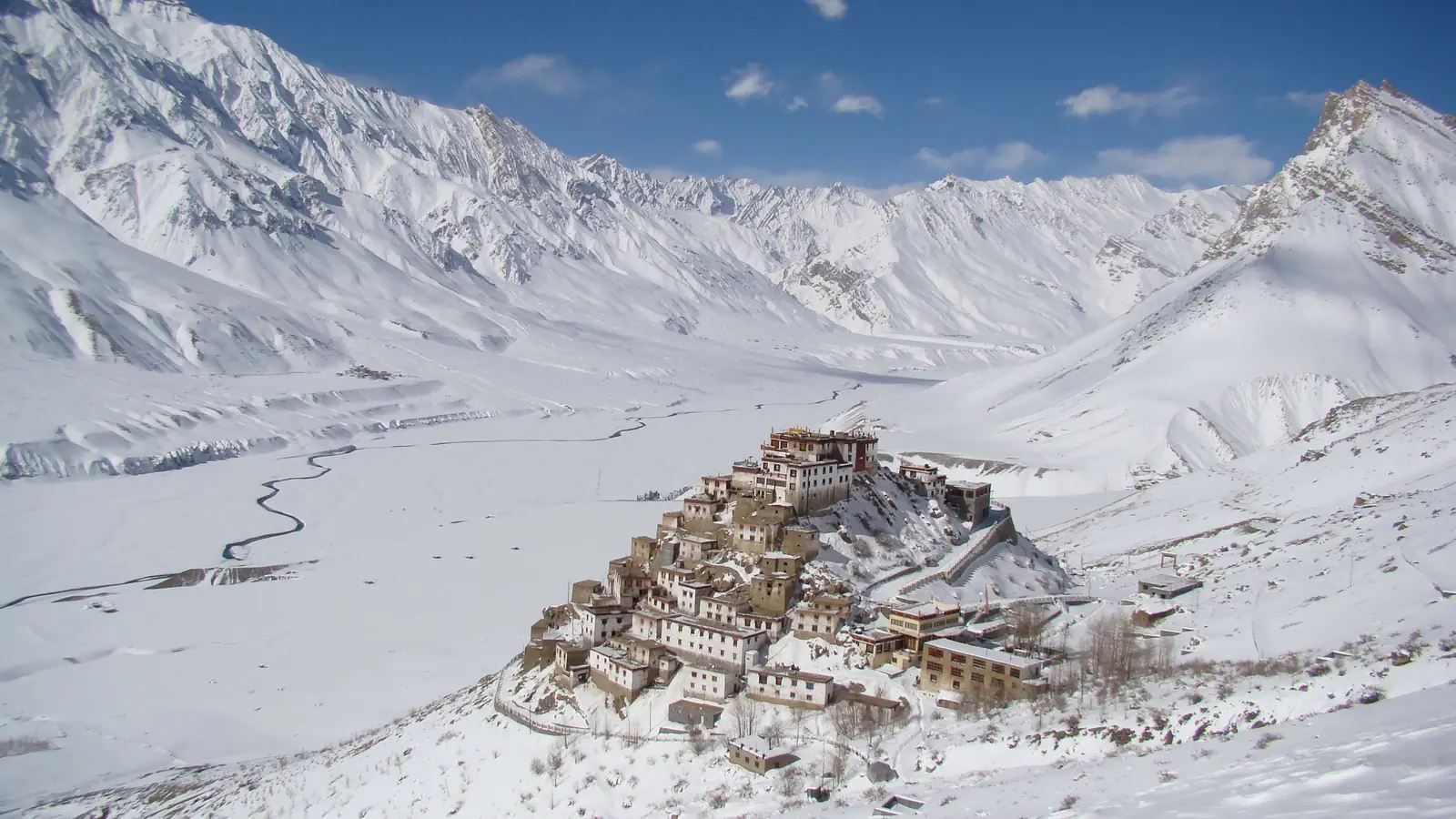
Spiti's strength is concentration. Tabo (996 CE), Ki, Dhankar, Langza's fossil fields and the world's highest post office at Hikkim all sit within a couple of hours of Kaza. You are not driving eight hours between sights.
Ladakh's strength is range. Nubra's dunes, Pangong, Zanskar, Hemis, Alchi and Thiksey, plus, in winter, snow leopard tracking and the Chadar in years when it runs. But things are far apart, and a lot of a Ladakh trip is spent in a car.
Altitude, seriously
Both are high enough to hurt you.
Spiti's floor is 3,800 m, higher than Leh. There is no "rest day at low altitude" option once you are in: the whole valley is up there. Passes reach 4,590 m.
Ladakh gives you Leh at 3,500 m as a base to acclimatise before Khardung La or Pangong. Use it. Two full days doing nothing is not a wasted holiday; it is what makes the rest of the trip work.
Either way, an itinerary without a dedicated acclimatisation day is one to reject regardless of price.
Permits
Spiti: Indian nationals need nothing. Foreign nationals need a Protected Area Permit for the Kaza–Tabo–Sumdo stretch.
Ladakh: Inner Line Permits are required for Nubra, Pangong and Tso Moriri for everyone, obtainable online or in Leh.
So which one
Pick Spiti if: you have 7+ days, you want lower costs, you prefer homestays to hotels, you want density rather than distance, or you like the idea of arriving somewhere slowly.
Pick Ladakh if: you have 5–6 days, you want to fly rather than drive, you want a wider range of landscapes, you need better infrastructure, or you are going in winter.
Pick Spiti first if it is your first time at altitude, counterintuitively. The Shimla approach acclimatises you properly, whereas flying into Leh does not.