Short answer: no. The District Disaster Management Authority in Leh suspended the 2026 Chadar season in early January. An unusually mild winter left the Zanskar river ice too thin to walk on safely, and no operator is legally permitted to run the route this season.
If you are being offered a 2026 Chadar departure right now, that tells you something important about the operator, and it is not something good.
What actually happened
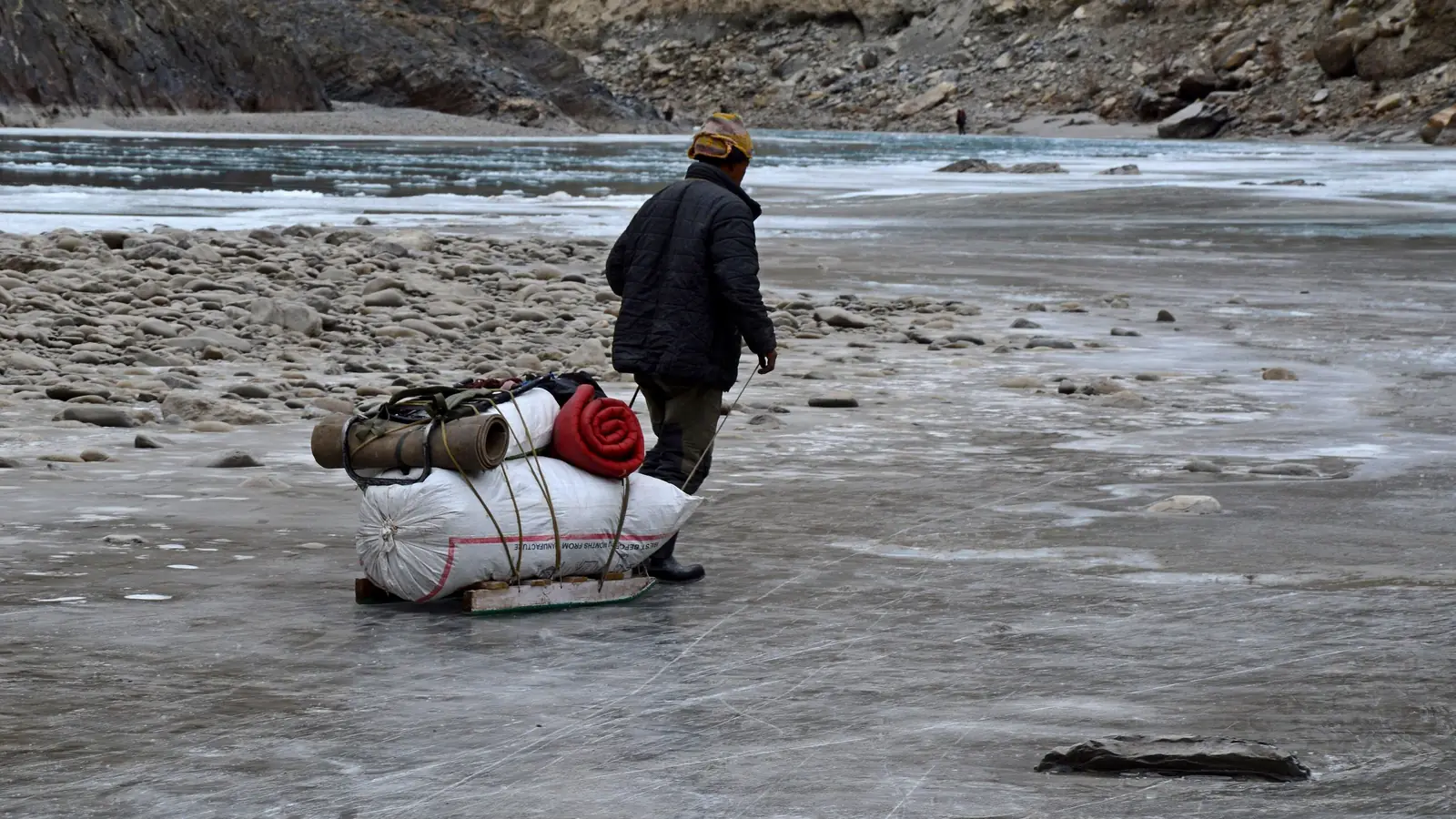
The Chadar works because the Zanskar freezes hard enough between mid-January and mid-February to carry foot traffic through a gorge that is otherwise impassable. Zanskari families have used it for generations to reach the Indus valley in winter.
That freeze is not guaranteed. It depends on a sustained run of very cold days, and 2026 did not deliver one. The ice formed in patches, never consolidated, and the administration made the call rather than let commercial groups test it.
This is not a one-off
The Chadar has always been weather-dependent. What has changed is that it is becoming weather-doubtful.
Warmer winters have shortened and destabilised the freeze window over the last decade. Seasons that once ran six weeks now run three or four, start later, and carry more open-water sections. 2026 is the first year it failed outright: it will not be the last.
If the Chadar is on your list, plan for it as a route that may simply not happen in a given year, and do not book non-refundable flights around it.
The rules, when it does run
Worth knowing now, because these are the questions to ask any operator when the route reopens.
- Registration with the Ladakh Autonomous Hill Development Council is mandatory for every trekker.
- Two days minimum in Leh at roughly 3,500 m before you start, for acclimatisation. This is not a suggestion; you must be cleared by a medical officer.
- A medical fitness certificate is required.
- Permits, wildlife and environmental fees, and adventure insurance are paid to the Ladakh administration and typically total around ₹10,000 on top of the trek price.
These rules exist because people have died on the route. An operator willing to shortcut them is telling you exactly how they handle everything else.
What to do in Ladakh instead this winter
The Chadar window overlaps with several things that are running normally.
Snow leopard tracking in Hemis. January and February are peak season, when the cats come lower following blue sheep. This has quietly become the main reason people visit Ladakh in winter. Success rates with experienced spotters are far better than most people expect.
Frozen Pangong. The lake freezes solid and the drive out is spectacular, though the cold at 4,350 m is serious.
Monastery festivals. Spituk Gustor and Stok Guru Tsechu both fall in the January–February window, with masked cham dances that are genuinely for the community rather than for visitors.
Zanskar in summer instead. If it was the valley you wanted rather than the ice, the Padum road over Pensi La opens around June, and Phugtal, a monastery built into a cliff cave, reachable only on foot, is arguably the better trip.
Before you book anything
Ask the operator directly: has the season been confirmed by the DDMA this year? A straight answer means they are plugged into the local administration. A vague one means they are selling you a maybe.
Whether 2027 runs will not be known until around late December. Anyone claiming certainty before then is guessing.