Coorg (Kodagu)
India's coffee heartland, estate walks, misted Western Ghats ridges, and a distinct Kodava culture that predates the plantations.
- Altitude
- 1,170 m
- Terrain
- Western Ghats coffee hills
- Best months
- Oct–Mar
- Region
- Karnataka, India
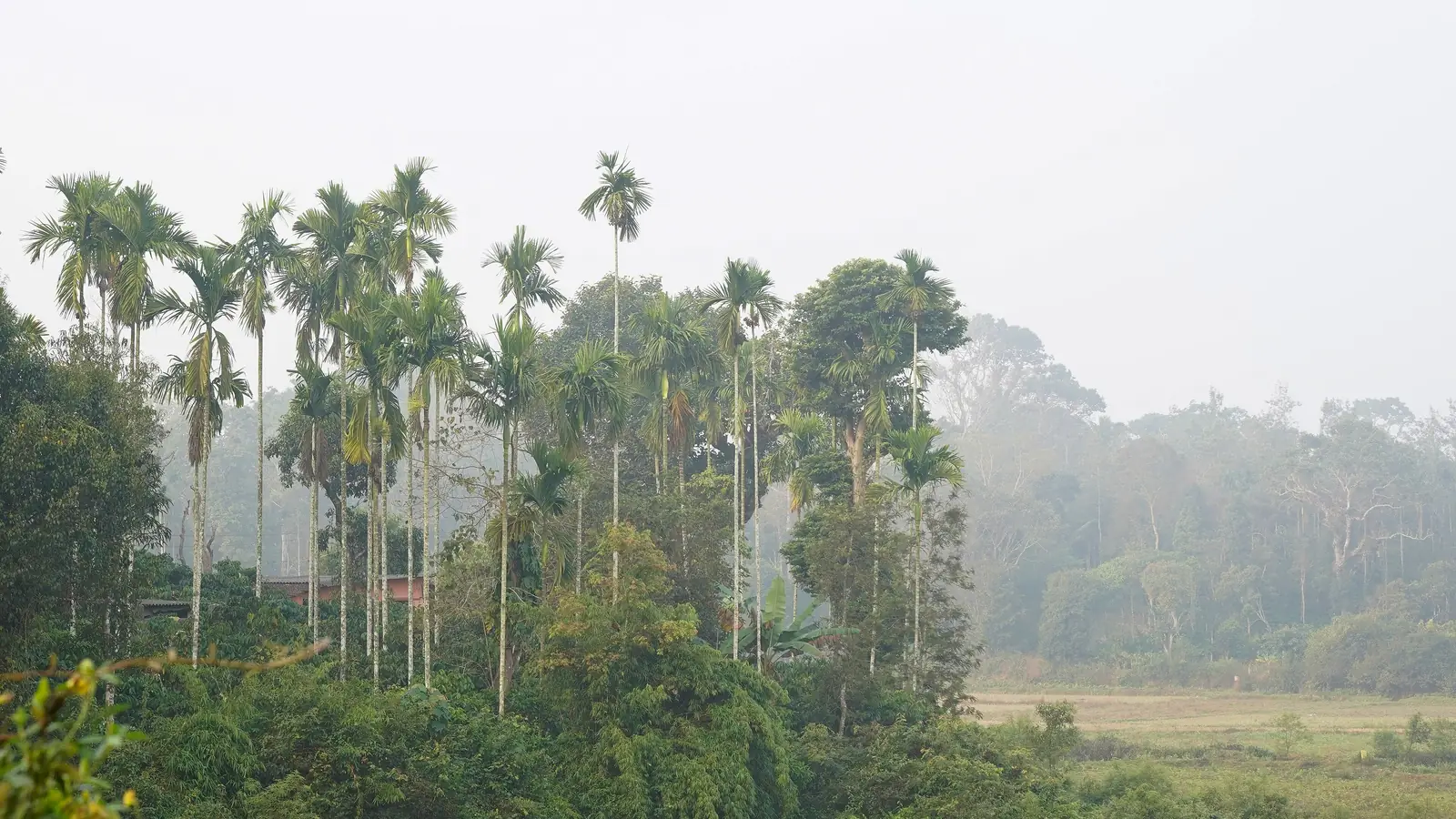
Kodagu grows a large share of India's coffee, and unlike most origins it is predominantly shade-grown under native canopy alongside pepper, cardamom and oranges. That mixed cropping is why the estates read as forest rather than monoculture, and why the birdlife is as good as it is.
The Kodava community has its own language, its own martial and ancestor traditions, and a cuisine built around pandi curry, kadumbuttu rice dumplings and the local wild mangosteen. It is genuinely distinct from surrounding Karnataka, and a guide from the community will show you a different Coorg than a resort will.
For walkers, Tadiandamol is the highest peak in Kodagu at 1,748 m and a straightforward day climb. Nagarhole, on the district's eastern edge, is one of the better tiger and elephant reserves in southern India and part of the Nilgiri biosphere.
Highlights
- Shade-grown coffee estates, walkable with the growers
- Tadiandamol peak at 1,748 m, the highest point in Kodagu
- Abbey and Iruppu falls, strongest just after the monsoon
- Nagarhole National Park, tiger, elephant and dhole
- Namdroling monastery at Bylakuppe, one of the largest Tibetan settlements in India
Common questions
What is the best time to visit Coorg?
October to March. Days are mild, nights drop to around 14 °C in December, and the estate trails are dry. Visit in October for the greenest landscape with waterfalls still running hard just after the monsoon.
Is Coorg worth visiting during the monsoon?
For scenery, yes: the waterfalls and mist are at their best. For walking, less so: trails become slippery, leeches are constant on estate paths, and viewpoints are often clouded in. Go for the atmosphere, not the views.
How do you get to Coorg?
There is no railway to Madikeri. Fly to Mangaluru (about 135 km) or Bengaluru (about 260 km) and drive, or take a train to Mysuru and cover the last 120 km by road.