July and August wipe out most of the Indian Himalaya for trekking. These two are the exceptions, and they are exceptions for opposite reasons.
The short version
| Valley of Flowers | Hampta Pass | |
|---|---|---|
| Max altitude | 4,329 m (Hemkund Sahib) | 4,287 m (the pass) |
| Distance | ~38 km | ~26 km |
| Total ascent | ~2,500 m | ~1,600 m |
| Duration | 6 days | 5 days |
| Grade | Moderate | Moderate |
| Season | July to September | June to September |
| Shape | Base camp, in and out daily | Point to point crossing |
| Weather | Wet by design | Wet in, dry out |
| State | Uttarakhand | Himachal Pradesh |
If you only take one thing: the altitudes are nearly identical, but Valley of Flowers makes you climb 900 m more and keeps you in the rain.
They handle the monsoon in opposite ways
This is the real distinction, and it is not a detail.
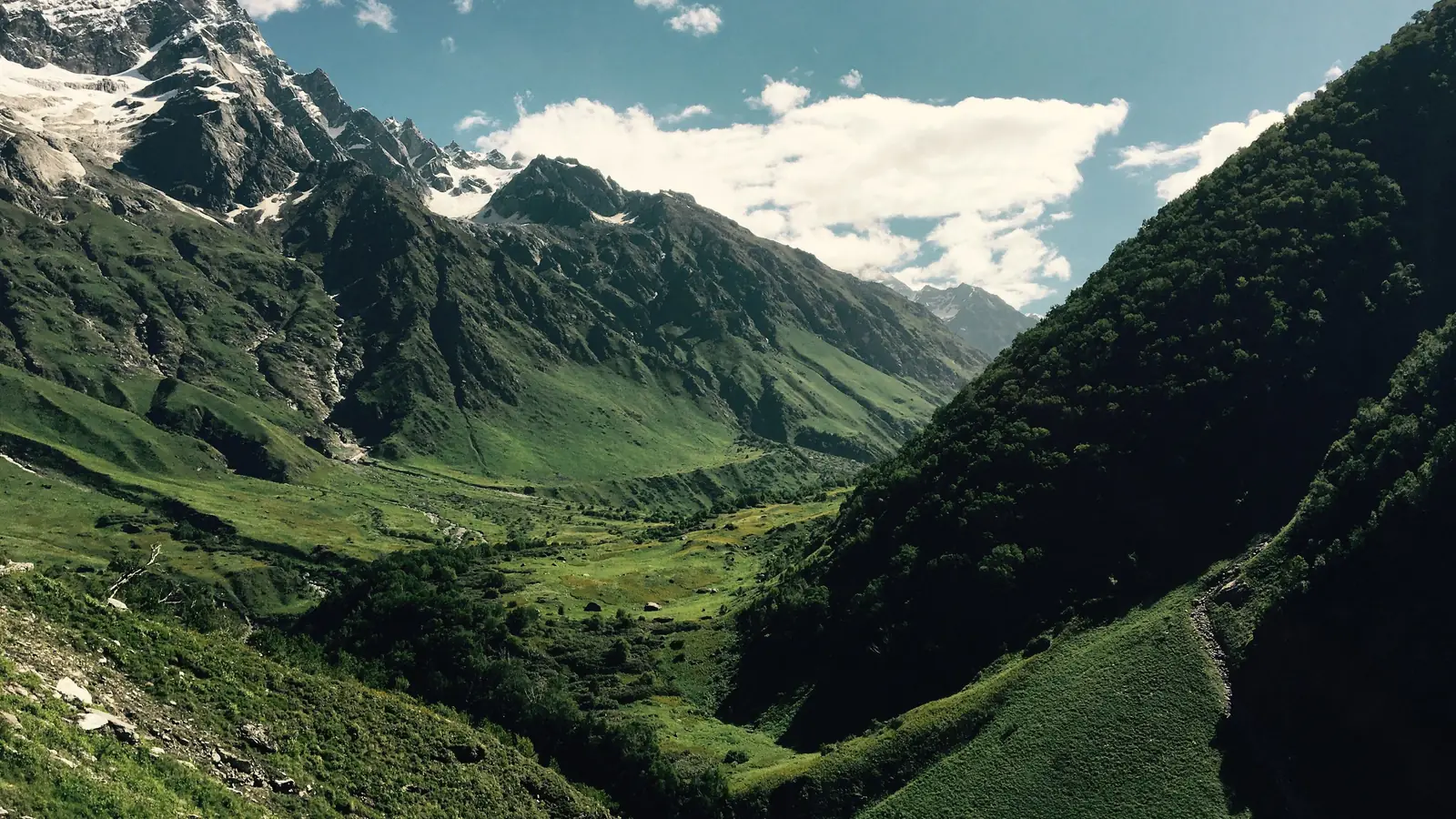
Valley of Flowers needs the rain. The monsoon is what triggers the bloom, and peak flowering runs mid-July through August, precisely when the weather is worst. Roughly 300 flowering species come out because it is raining on them. Going in the dry season means going to an empty valley.
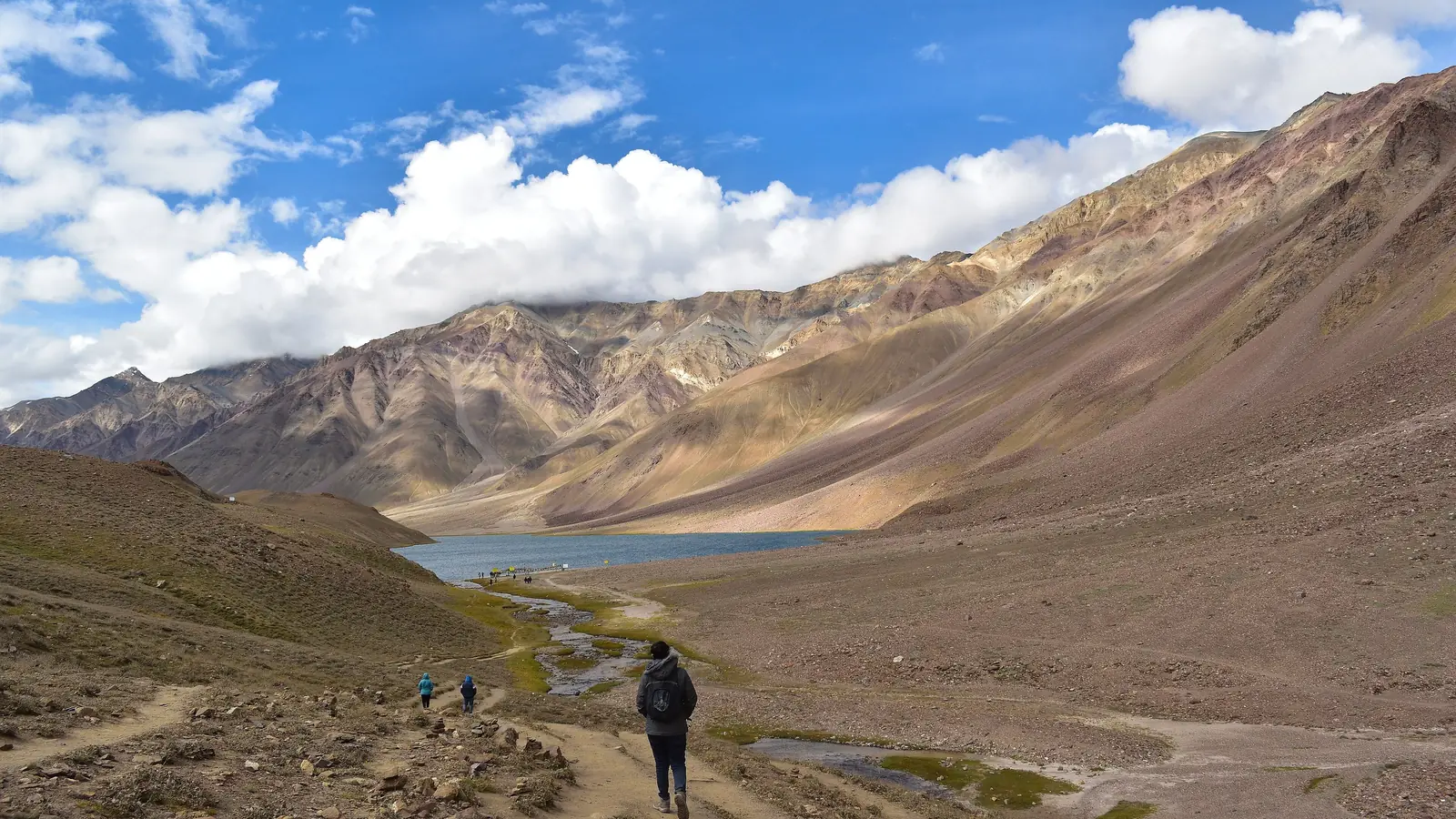
Hampta Pass escapes the rain. You start in wet Kullu, cross at 4,287 m, and descend into Lahaul, which is in rain shadow and stays arid. The far side is brown and bare while the near side is green.
So one trek asks you to accept being wet for six days. The other lets you climb out of the weather on day three.
Valley of Flowers is the harder one, despite the lower pass
The altitudes look interchangeable. The effort does not.
Valley of Flowers covers 38 km with 2,500 m of ascent against Hampta's 26 km and 1,600 m. Almost all of that extra height comes from Hemkund Sahib, a glacial lake and Sikh shrine at 4,329 m reached by a steep stone-paved climb from the same base. That is the hard day, and it is where this trek's real altitude lives.
You can skip Hemkund and just do the valley. Many people do, and it turns a moderate trek into an easy one.
The shapes are completely different
Valley of Flowers is a base-camp trek. Camping inside the valley is not permitted, so you stay at Ghangaria and walk in and out each day. Same bed every night, lighter daypack, and you can sit out a bad day.
Hampta is a traverse. You carry the trip forward with you, you sleep somewhere new each night, and there is no sitting out the pass day; once you are committed, the way out is over the top.
If weather anxiety is a factor, the base-camp shape is genuinely more forgiving.
Money and paperwork
Valley of Flowers is a national park with a gate fee: ₹200 for Indian nationals, ₹800 for foreign nationals, valid three days, issued at the park entrance near Ghangaria. The park opened for the 2026 season on 1 June and stays accessible until October.
Hampta Pass needs Forest Department permits from the office in Manali, normally handled by your operator. If your itinerary tacks on Chandratal, that is a separate permit and a weather-dependent add-on. Confirm it before you pay rather than after.
So which one
Pick Valley of Flowers if the flowers are the point, you want to sleep in the same place every night, and you accept that you will be wet. Go mid-July to August or there is nothing to see.
Pick Hampta Pass if you want the landscape to change under your feet, you would rather cross something than return the same way, and you would prefer to end the trek somewhere dry.
Pick neither if you are new to altitude and it is your first Himalayan trek. Both sit above 4,200 m. Kedarkantha tops out at 3,810 m in winter and is a gentler introduction.