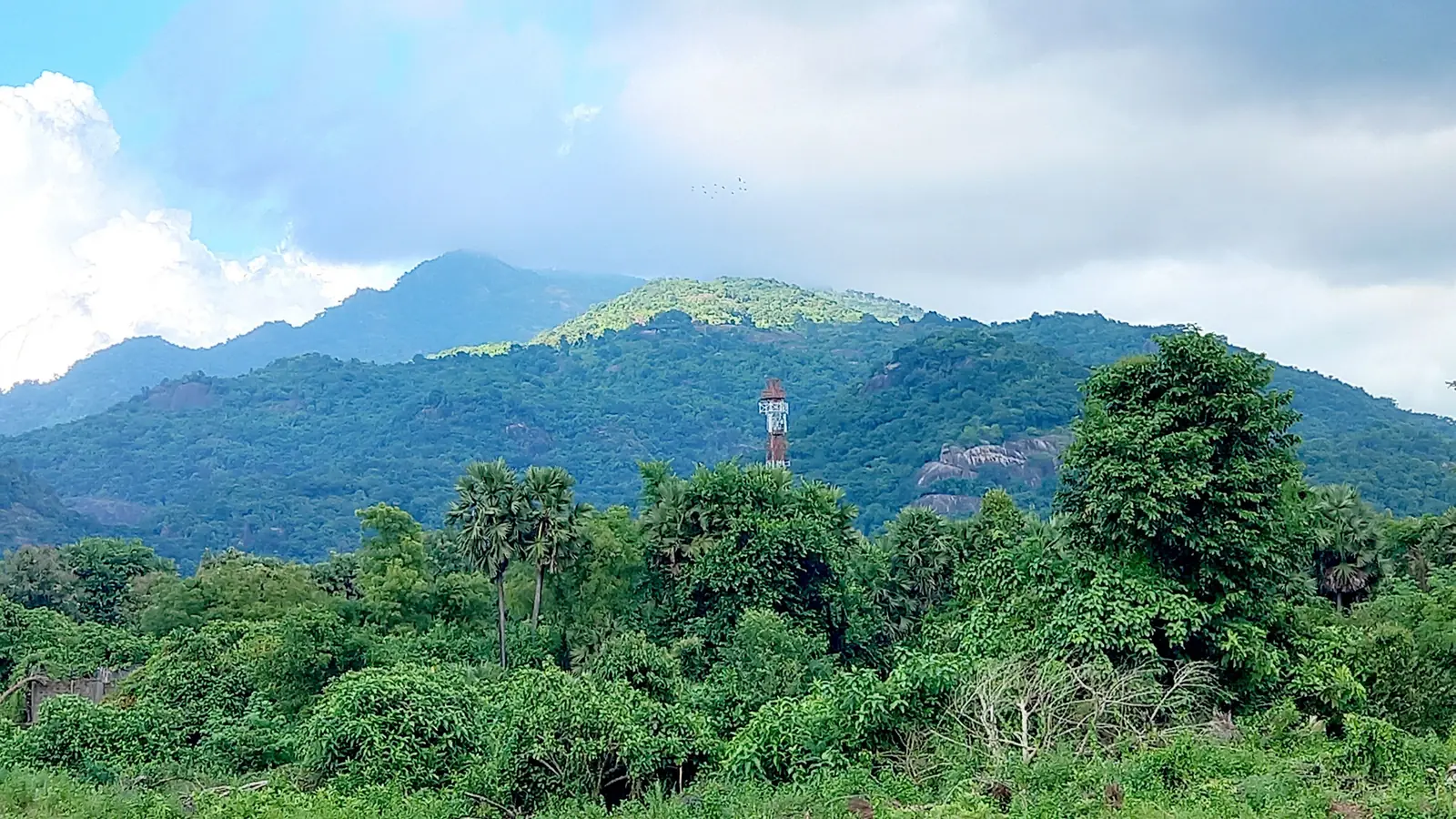
Araku Valley
Coffee-estate trails through the Eastern Ghats, and a Thursday tribal market that has run for generations.
- Altitude
- 910 m
- Terrain
- Eastern Ghats coffee hills
- Best months
- Oct–Feb
- Region
- Andhra Pradesh, India
Araku is the rare Indian hill station that is genuinely about agriculture rather than colonial nostalgia. Arabica has been grown here since the early twentieth century, and the valley's coffee is now farmed largely by Adivasi cooperatives whose beans reach specialty roasters in Europe. Walking the estates with someone who farms them is a different experience from visiting the coffee museum.
The Thursday market at Araku draws people from surrounding hamlets and remains a working market rather than a staged one. Nearby, the Borra caves are among the deepest in India, a million-year-old karst system that the Gosthani river still runs through.
The train from Visakhapatnam is a genuine reason to plan the trip around a specific departure. The line climbs through 58 tunnels and across 84 bridges, and the stretch after Tyda is the reason people take the slow option over the road.
Highlights
- Coffee estates farmed by Adivasi cooperatives, walkable with the growers
- Thursday tribal market, a working market, not a staged one
- Borra caves, among the deepest karst caves in India
- The Kirandul railway: 58 tunnels, 84 bridges through the Eastern Ghats
- Katiki and Chaparai waterfalls, strongest just after the monsoon
Common questions
What is the best time to visit Araku Valley?
October to February. Days are mild, nights drop to around 10 °C in December, and the estate trails are dry. Just after the monsoon, in October, the waterfalls are still running strongly and the valley is at its greenest.
Is the Araku train worth taking over driving?
For most people, yes. The Kirandul passenger line climbs through 58 tunnels and 84 bridges and takes roughly five hours against about three by road. Book the day train: the scenery is the point.
Can you visit coffee estates in Araku?
Yes. Several Adivasi cooperatives host walks through the plantations, and local guides can arrange visits that include picking, pulping and tasting. This is far more substantial than the roadside coffee museum.