Shirdi
श्री साईबाबा
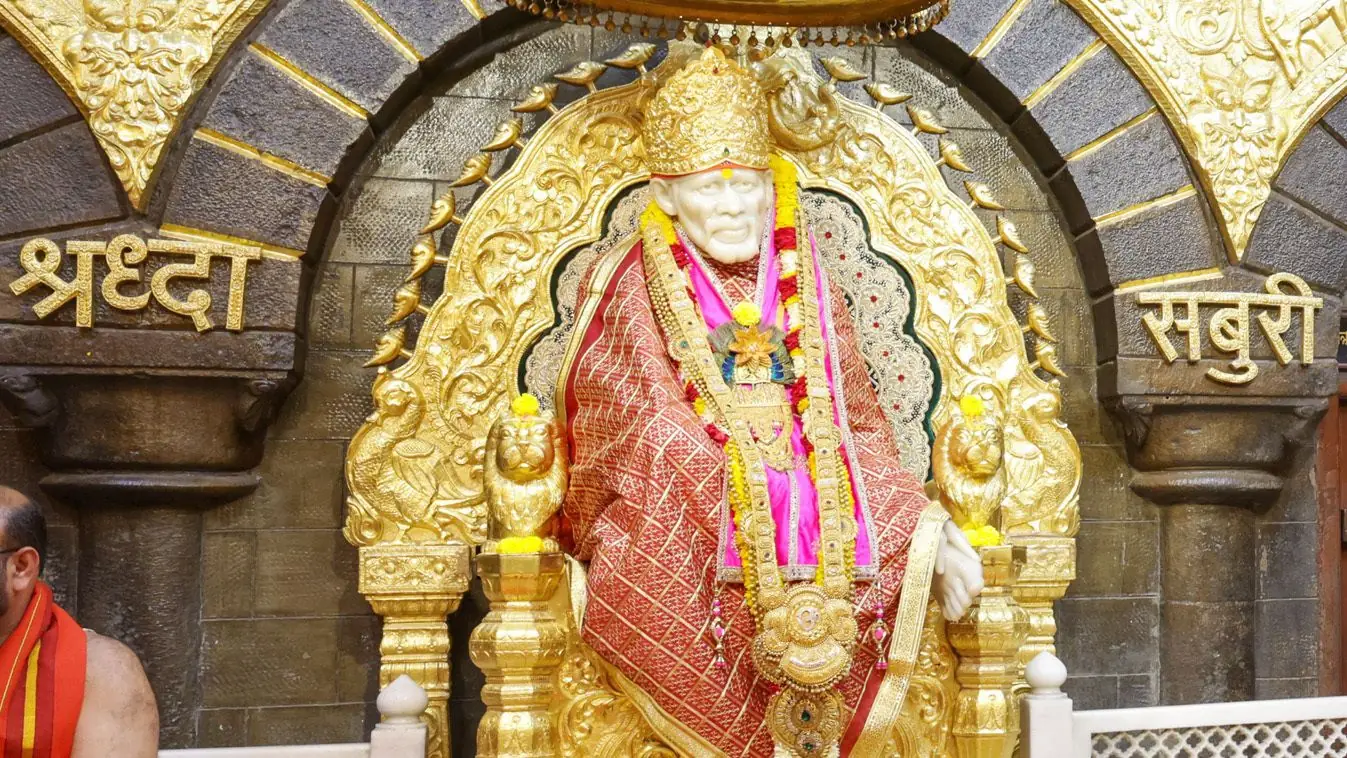
The samadhi of Sai Baba, whose following crosses Hindu and Muslim tradition. Four fixed aartis a day, and a queue system built around them.
- Deity
- Sai Baba
- Tradition
- Shared Hindu–Sufi devotional tradition
- Managed by
- Shri Saibaba Sansthan Trust
- Dress code
- Modest dress; no strict traditional requirement
- Best months
- Oct–Mar
Shirdi is organised around the Samadhi Mandir and around time rather than around space. Four aartis are performed each day at fixed hours, and almost every decision a visitor makes, when to join the queue, when to eat, when to arrive, follows from which aarti they intend to attend.
The Shri Saibaba Sansthan Trust runs darshan passes, accommodation and the Prasadalaya, which serves free meals to tens of thousands daily. As at Tirupati, the infrastructure is well-run and assumes you understand it.
Beyond the Samadhi Mandir, Dwarkamai, the mosque where Sai Baba lived for decades, Gurusthan and the Chavadi are all within a short walk, and are usually visited in a single circuit.
What to do when you arrive
Almost everything that goes wrong here is a sequencing problem, the right things done in the wrong order. This is the order that works.
Pick which aarti you are attending
Four are performed daily: Kakad (early morning), Madhyan (noon), Dhoop (sunset) and Shej (night). Aarti attendance is separate from ordinary darshan and needs its own pass, so decide first and plan the day backwards from it.
Before bookingBook the darshan or aarti pass online
The Sansthan issues passes through its official portal. Aarti passes are limited and go quickly around festivals.
Weeks aheadBook Sansthan accommodation rather than private hotels
Trust-run bhakta niwas complexes sit close to the temple and cost far less than the private hotels clustered around the approach roads.
Weeks aheadDeposit footwear and electronics before the queue
Free cloakrooms operate near the entrances. Phones and cameras are not permitted inside the Samadhi Mandir.
On arrivalEat at the Prasadalaya
The Trust's dining hall serves free meals to tens of thousands each day and is open through the day. It is part of the visit, not a fallback.
Any time
A note on what this page is not. Ritual detail varies by family tradition and by sampradaya. This page covers the practical and administrative side, and leaves religious instruction to the temple and to your own community.
Darshan options compared
| Type | Cost | How to book | Who it suits |
|---|---|---|---|
| General darshan | Free | No booking, join the queue | Flexible timing |
| Online darshan pass | Free | Sansthan portal, timed slot | Fixed travel dates |
| Aarti pass | Paid, varies by aarti | Sansthan portal, limited | Attending a specific aarti |
| Senior citizen / differently-abled | Free | Dedicated counter, ID required | Reduced-mobility pilgrims |
Waiting times shift enormously with festival dates and weekends. Any site quoting a fixed hour count is guessing, ask a local guide the week you travel.
What to do, and what not to
Do
- Decide which aarti you are attending before you book anything else
- Use Sansthan accommodation and the Prasadalaya: both are run for pilgrims, not for profit
- Deposit phones and footwear at the free cloakrooms before joining the queue
- Walk the full circuit: Samadhi Mandir, Dwarkamai, Gurusthan, Chavadi
Don’t
- Assume an aarti pass is included with ordinary darshan: it is separate
- Book through agents promising queue-skipping; passes come from the Sansthan
- Carry phones or cameras into the Samadhi Mandir
- Underestimate festival crowds at Guru Purnima, Ramnavami or Vijayadashami
Common questions
What are the Shirdi aarti timings?
Four aartis are performed daily, Kakad in the early morning, Madhyan at noon, Dhoop at sunset and Shej at night. Exact times shift slightly with the season, so confirm on the Sansthan portal for your travel date.
Do I need to book darshan at Shirdi in advance?
Not for general darshan, which is free and open. You do need a pass for aarti attendance, and a booked timed slot makes any visit considerably easier, both come from the Shri Saibaba Sansthan Trust portal.
Is there a dress code at Shirdi?
There is no strict traditional requirement, unlike Tirumala. Modest dress covering shoulders and knees is expected.